


Dental Bridges vs. Implants: Which Tooth Replacement Option Is Right for You?
Missing teeth can affect your confidence, oral health, and overall quality of life. Fortunately, modern dentistry offers effective solutions to restore your smile. Two of the most popular tooth replacement options are dental bridges and dental implants. But how do you decide which one is right for you?
In this comprehensive guide, we’ll compare dental bridges vs. implants in terms of cost, durability, procedure, maintenance, benefits, and candidacy. By the end, you’ll have a clear understanding of which option best suits your dental needs and lifestyle.
Why Replacing Missing Teeth Is Important
Before comparing dental bridges and implants, it’s important to understand why replacing missing teeth matters.
When a tooth is lost, it can lead to:
Shifting of surrounding teeth
Bite misalignment
Jawbone deterioration
Difficulty chewing and speaking
Increased risk of gum disease
Changes in facial structure
Both dental bridges and dental implants are designed to restore function, prevent complications, and improve appearance.
What Is a Dental Bridge?
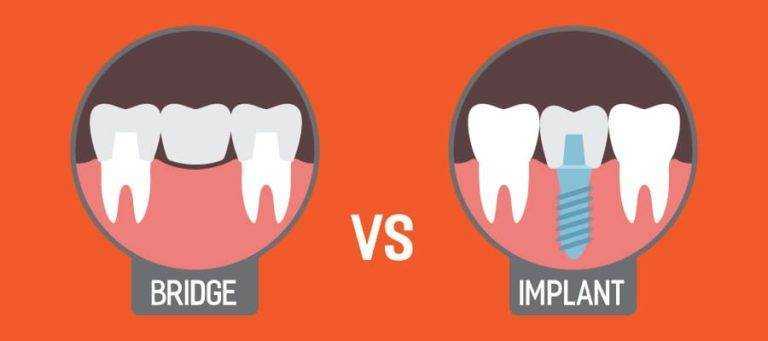
A dental bridge is a fixed restoration that replaces one or more missing teeth by “bridging” the gap between adjacent teeth. It consists of artificial teeth (pontics) anchored by dental crowns placed on neighboring natural teeth or supported by implants.
Types of Dental Bridges
There are several types of dental bridges:
Traditional Bridge
Uses crowns on both sides of the missing tooth for support.
Cantilever Bridge
Supported by a crown on only one adjacent tooth.
Maryland Bridge
Uses a metal or porcelain framework bonded to the back of adjacent teeth.
Implant-Supported Bridge
Anchored by dental implants rather than natural teeth.
Dental bridges are typically completed in two to three dental visits.
What Is a Dental Implant?
A dental implant is a titanium post surgically placed into the jawbone to act as an artificial tooth root. Once the implant integrates with the bone (a process called osseointegration), a crown is attached to complete the restoration.
Dental implants replace both the visible tooth and the root, making them one of the most advanced tooth replacement options available.
Components of a Dental Implant
A dental implant consists of:
Implant post (placed in the jawbone)
Abutment (connector piece)
Dental crown (visible tooth portion)
The full process can take several months due to healing time.
Dental Bridges vs. Implants: Key Differences
Understanding the main differences can help you make an informed decision.
1. Procedure and Treatment Time
Dental Bridge
The procedure is non-surgical unless extractions are needed. Treatment usually takes a few weeks.
Dental Implant
Requires minor oral surgery. Healing and integration may take 3 to 6 months or longer.
If you want a faster solution, a dental bridge may be more appealing.
2. Durability and Longevity
Dental Bridge
Typically lasts 5 to 15 years with proper care.
Dental Implant
Can last 20 years or more, often a lifetime with good oral hygiene.
Implants generally offer greater long-term durability.
3. Impact on Surrounding Teeth
Dental Bridge
Requires reshaping adjacent healthy teeth to place crowns. This permanently alters those teeth.
Dental Implant
Does not affect neighboring teeth. It stands independently.
If preserving natural tooth structure is important, implants may be preferable.
4. Bone Health
Dental Bridge
Does not stimulate the jawbone beneath the missing tooth, which can lead to bone loss over time.
Dental Implant
Stimulates the jawbone like a natural tooth root, helping prevent bone deterioration.
For long-term jaw health, implants offer a significant advantage.
5. Cost Comparison
Dental Bridge
Lower upfront cost. Typically ranges from $1,500 to $5,000 depending on materials and complexity.
Dental Implant
Higher upfront cost. A single implant can range from $3,000 to $6,000 or more.
While implants are more expensive initially, they may offer better long-term value due to longevity.
Pros and Cons of Dental Bridges
Advantages of Dental Bridges
Faster treatment timeline
Lower initial cost
Non-surgical procedure
Effective for replacing multiple adjacent teeth
Disadvantages of Dental Bridges
Requires alteration of adjacent teeth
Shorter lifespan than implants
Does not prevent bone loss
May require replacement over time
Dental bridges remain a reliable option, especially for patients seeking a quicker and more affordable solution.
Pros and Cons of Dental Implants
Advantages of Dental Implants
Long-lasting and durable
Preserve jawbone health
Do not affect surrounding teeth
Natural look and feel
High success rate
Disadvantages of Dental Implants
Higher initial cost
Requires surgery
Longer treatment time
Not suitable for patients with insufficient bone without grafting
Dental implants are often considered the gold standard for tooth replacement.
Who Is a Good Candidate for a Dental Bridge?
You may be a good candidate for a dental bridge if:
You have healthy adjacent teeth
You want a quicker treatment
You prefer a non-surgical option
You are looking for a lower upfront cost
Bridges work well when the neighboring teeth already require crowns or restorations.
Who Is a Good Candidate for a Dental Implant?
You may be an ideal candidate for a dental implant if:
You have sufficient jawbone density
Your gums are healthy
You want a long-term solution
You prefer not to alter surrounding teeth
You are in good overall health
Patients with bone loss may still qualify with bone grafting procedures.
Maintenance and Aftercare
Both dental bridges and implants require proper oral hygiene.
Caring for a Dental Bridge
Brush twice daily
Floss under the bridge using special floss threaders
Attend regular dental checkups
Caring for a Dental Implant
Brush and floss daily like natural teeth
Avoid smoking
Maintain regular professional cleanings
Proper care significantly extends the lifespan of either option.
Which Tooth Replacement Option Is Right for You?
The choice between dental bridges vs. implants depends on several factors:
Your oral health
Bone density
Budget
Timeline
Personal preference
Long-term dental goals
If you want a faster, more affordable solution and have strong adjacent teeth, a dental bridge may be suitable.
If you prefer a long-lasting, independent restoration that protects jawbone health, a dental implant may be the better investment.
Consulting Your Dentist Is Key
Every patient’s situation is unique. A comprehensive dental exam, including X-rays and evaluation of bone structure, is necessary before making a final decision.
Your dentist will assess:
Number of missing teeth
Condition of surrounding teeth
Gum health
Bone density
Medical history
This professional evaluation ensures the safest and most effective treatment plan.
Final Thoughts on Dental Bridges vs. Implants
When comparing dental bridges vs. implants, there is no one-size-fits-all answer. Both options effectively restore missing teeth, improve function, and enhance appearance.
Dental bridges offer a quicker and more affordable solution, while dental implants provide superior durability and long-term oral health benefits.
Understanding the differences empowers you to make an informed choice. Schedule a consultation with your dentist to determine which tooth replacement option is right for you and take the first step toward restoring your confident, healthy smile.