

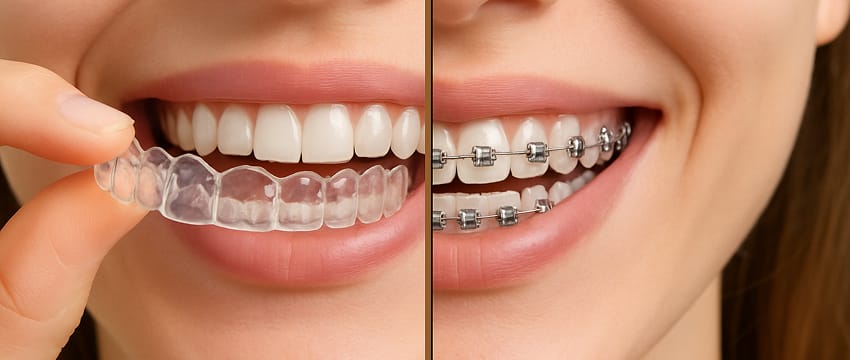
Braces vs Clear Aligners: Which Orthodontic Treatment Works Best?
Choosing between traditional braces and clear aligners is one of the most common decisions people face when starting orthodontic treatment. Both options are designed to straighten teeth, improve bite alignment, and enhance long-term oral health, but they work in different ways and suit different lifestyles. In this guide, we’ll break down how each treatment works, their advantages and disadvantages, and how to decide which one is best for your dental needs.
Understanding Orthodontic Treatment Options
Orthodontic treatment focuses on correcting misaligned teeth and jaw issues such as crowding, gaps, overbite, underbite, and crossbite. The two most popular solutions today are traditional metal braces and clear aligners like Invisalign-style systems.
While both aim to achieve a straighter smile, they differ in appearance, comfort, cost, and treatment flexibility. Understanding these differences is essential before making a decision.
What Are Traditional Braces?
Traditional braces are fixed orthodontic devices made of metal brackets and wires that are attached to the teeth. These components apply continuous pressure over time, gradually shifting teeth into their correct positions.
Modern braces are smaller and more comfortable than older versions. They are highly effective for treating complex dental issues, including severe misalignment and bite problems.
What Are Clear Aligners?
Clear aligners are removable, transparent trays custom-made to fit your teeth. They are designed using digital scans and gradually move your teeth by replacing each set of aligners every one to two weeks.
Brands like Invisalign and other similar systems have made clear aligners popular among adults and teens who want a more discreet orthodontic solution.
How Braces Work vs How Clear Aligners Work
Both treatments apply controlled force to move teeth, but the method differs significantly.
How Braces Move Teeth
Braces work through a system of brackets and archwires. The orthodontist periodically tightens the wires, which increases pressure and shifts the teeth into alignment. Elastic bands may also be used to correct bite issues.
Because braces are fixed, they work continuously and do not rely on patient compliance.
How Clear Aligners Move Teeth
Clear aligners use a series of plastic trays that apply gentle pressure to specific teeth. Each new set of aligners slightly adjusts tooth position until the desired alignment is achieved.
However, success depends heavily on wearing the aligners 20–22 hours per day.
Effectiveness of Braces vs Clear Aligners
When comparing effectiveness, both treatments can deliver excellent results, but suitability depends on the complexity of the case.
Braces for Complex Dental Issues
Braces are generally considered more effective for severe orthodontic problems such as:
Severe crowding or spacing
Significant bite misalignment
Rotated teeth
Complex jaw correction cases
Because braces provide constant and precise control, orthodontists often recommend them for difficult treatments.
Clear Aligners for Mild to Moderate Cases
Clear aligners are highly effective for:
Mild to moderate crowding
Small gaps between teeth
Minor bite adjustments
Cosmetic alignment improvements
Advancements in technology have expanded their capabilities, but they may still be less effective for highly complex cases.
Aesthetic Differences Between the Two Options
One of the biggest deciding factors for patients is appearance.
Why Clear Aligners Are More Discreet
Clear aligners are virtually invisible when worn, making them a popular choice for adults and professionals who want a subtle treatment option. They do not have wires or brackets, which improves confidence during social interactions.
Why Braces Are More Noticeable
Traditional braces are visible due to their metal components. However, ceramic braces are an alternative that blends more naturally with tooth color, offering a less noticeable option compared to metal braces.
Comfort and Daily Experience
Comfort plays a major role in orthodontic treatment satisfaction.
Comfort with Clear Aligners
Clear aligners are generally more comfortable because they do not have sharp brackets or wires. However, patients may feel mild pressure when switching to a new set of trays.
Since they are removable, eating and brushing are easier compared to braces.
Comfort with Braces
Braces can cause discomfort, especially after adjustments. Wires and brackets may irritate the inside of the mouth, although orthodontic wax can help reduce irritation.
Unlike aligners, braces cannot be removed, which may require dietary adjustments.
Maintenance and Oral Hygiene
Maintaining good oral hygiene is essential during orthodontic treatment.
Cleaning Braces
Braces require extra effort to clean because food particles can get trapped around brackets and wires. Patients often need special brushes and flossing tools to maintain proper hygiene.
Poor cleaning can increase the risk of plaque buildup and tooth decay.
Cleaning Clear Aligners
Clear aligners are easier to maintain. They can be removed for brushing and flossing, allowing normal oral hygiene routines. The aligners themselves must also be cleaned regularly to avoid staining and odor.
Dietary Restrictions
Food choices are another important difference.
Eating with Braces
Patients with braces must avoid certain foods such as:
Sticky candies
Hard foods like nuts and popcorn
Chewy foods like gum
These restrictions help prevent damage to brackets and wires.
Eating with Clear Aligners
Clear aligners are removed during meals, so there are no food restrictions. However, patients must brush their teeth before reinserting aligners to prevent staining and bacteria buildup.
Treatment Duration and Results
How Long Braces Take
Braces typically take 18 months to 3 years depending on the severity of the case. Because they work continuously, they are often effective for more complex movements.
How Long Clear Aligners Take
Clear aligner treatment usually lasts 6 months to 2 years for mild to moderate cases. However, success depends heavily on patient compliance.
Cost Comparison
Cost of Braces
Braces are often more affordable than clear aligners, though prices vary depending on complexity and type (metal, ceramic, or lingual braces).
Cost of Clear Aligners
Clear aligners are generally more expensive due to advanced technology and customization. However, many patients consider the aesthetic benefits worth the cost.
Which Orthodontic Treatment Works Best?
Choosing Braces
Braces are best for patients who:
Have complex orthodontic issues
Want a more affordable option
Prefer a treatment that does not rely on daily discipline
Choosing Clear Aligners
Clear aligners are best for patients who:
Want a discreet treatment option
Have mild to moderate alignment issues
Can commit to wearing aligners consistently
Final Verdict: Braces vs Clear Aligners
There is no universal answer to which treatment works best. The right choice depends on your dental condition, lifestyle, budget, and personal preference. Braces remain the gold standard for complex cases, while clear aligners offer a modern, convenient, and aesthetic alternative for simpler corrections.
Consulting an orthodontist is the most reliable way to determine which treatment will deliver the best long-term results for your smile.