


How Does Dental Bonding Work? A Step-by-Step Guide
If you have chipped teeth, small gaps, uneven edges or other minor dental imperfections, you may be considering dental bonding as a way to improve your smile. Dental bonding is a popular cosmetic dentistry treatment that can enhance the appearance of your teeth without requiring extensive dental work.
But how does dental bonding work, and what actually happens during the procedure?
Also known as composite bonding, this treatment involves applying a tooth-coloured resin material to the surface of your teeth to improve their shape, size and appearance. The material is carefully sculpted, hardened and polished to create a natural-looking finish that blends with your surrounding teeth.
Whether you are exploring cosmetic dental treatments for the first time or comparing bonding with other options, understanding the process can help you feel more confident about your decision.
In this guide, we explain how dental bonding works, what happens during each stage of treatment and how to maintain your results.
What Is Dental Bonding?
Dental bonding is a cosmetic dental procedure that uses a tooth-coloured composite resin to repair or improve the appearance of natural teeth.
The resin is designed to match the colour of your existing teeth, allowing your dentist to make subtle changes to their shape and appearance. Once applied, the material is moulded to achieve the desired result and hardened using a specialised curing light.
Dental bonding is commonly used to address minor cosmetic concerns, including:
Chipped or cracked teeth.
Small gaps between teeth.
Uneven or irregular tooth edges.
Misshapen or undersized teeth.
Certain types of tooth discolouration.
Minor imperfections affecting the appearance of your smile.
One of the main advantages of composite bonding is that it generally requires minimal preparation of the natural tooth structure. Depending on your dental needs, treatment can often be completed in a single appointment.
How Does Dental Bonding Work? A Step-by-Step Guide
The dental bonding procedure is generally straightforward, although the exact process can vary depending on the number of teeth being treated and the results you want to achieve.
Here is what you can typically expect during your dental bonding appointment.
Step 1: Initial Consultation and Smile Assessment
Before starting dental bonding treatment, your dentist will examine your teeth and discuss your cosmetic goals.
This consultation is an important part of the process because it helps determine whether composite bonding is the most suitable treatment for your needs.
Your dentist will assess factors such as:
The overall condition of your teeth and gums.
The shape, size and alignment of your teeth.
Your natural tooth colour.
Your bite and how your teeth come together.
Any existing dental problems that may need attention.
You will also have the opportunity to explain what you would like to change about your smile. Your dentist can then recommend a treatment plan based on your individual circumstances.
Step 2: Choosing the Right Composite Resin Shade
Once your dentist confirms that dental bonding is appropriate, they will select a composite resin shade that complements your natural teeth.
Modern composite materials are available in a range of shades, allowing dentists to achieve a result that blends naturally with the surrounding teeth.
Shade selection is particularly important when bonding visible front teeth, as the finished restoration should look consistent with your natural smile.
If you are also considering teeth whitening, your dentist may recommend completing whitening treatment before bonding. This allows the composite resin to be matched to your preferred tooth shade.
Step 3: Preparing the Tooth Surface
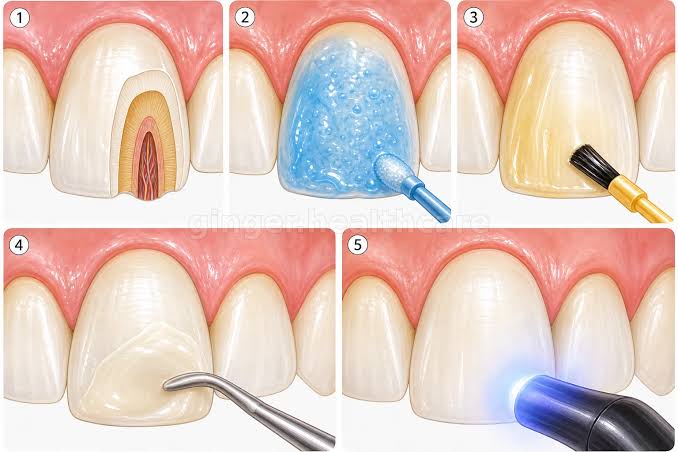
The next stage involves preparing the tooth so that the composite resin can adhere properly.
Your dentist will gently clean the treatment area and may apply a mild conditioning solution to the tooth surface. This creates an appropriate surface for the bonding agent to attach to.
A special adhesive is then applied to help secure the composite resin to the natural tooth.
One of the benefits of dental bonding is that it usually requires little preparation. In many cases, significant removal of natural tooth enamel is unnecessary.
Local anaesthetic is not always required, although it may be used if the treatment involves an area of sensitivity or additional dental work.
Step 4: Applying the Composite Resin
Once the tooth has been prepared, your dentist will begin applying the tooth-coloured composite resin.
The material is placed directly onto the tooth in small amounts and carefully shaped to address the specific cosmetic concern.
For example, if you have a chipped tooth, the resin can be used to rebuild the missing area. If you have a small gap between your teeth, additional material may be added to create a more balanced appearance.
Your dentist will carefully consider the natural contours, proportions and edges of your teeth to ensure the result complements your smile.
This stage requires precision and attention to detail, as the way the resin is shaped plays a significant role in the final appearance.
Step 5: Hardening the Resin with a Curing Light
After the composite resin has been shaped, your dentist will use a specialised curing light to harden the material.
The light activates the ingredients within the composite resin, causing it to set and bond securely to the tooth surface.
This process usually takes only a short amount of time for each application.
Once the resin has hardened, it becomes strong enough to withstand normal everyday dental function, although care should still be taken to avoid excessive pressure on bonded teeth.
Step 6: Shaping, Adjusting and Polishing
The final stage involves refining the bonded tooth to achieve a smooth and natural-looking finish.
Your dentist will check the shape, size and overall appearance of the restoration. They may make small adjustments to ensure the bonded tooth fits comfortably with your bite and looks balanced alongside your other teeth.
The composite resin is then polished to create a smooth surface that resembles the natural appearance of tooth enamel.
Once the procedure is complete, your dentist will check the final result and provide advice on how to care for your newly bonded teeth.
How Long Does Dental Bonding Take?
One of the reasons dental bonding is popular is that it is generally a relatively quick cosmetic dental treatment.
In many cases, bonding a single tooth takes approximately 30 to 60 minutes. However, the appointment may take longer if multiple teeth require treatment or more detailed shaping is needed.
Unlike porcelain veneers, which typically involve laboratory fabrication and multiple appointments, composite bonding can often be completed in one visit.
Your dentist will provide a more accurate estimate after assessing your teeth and discussing your treatment plan.
Does Dental Bonding Hurt?
Most patients find dental bonding comfortable because it is generally minimally invasive and involves little preparation of the natural tooth structure.
Local anaesthetic is often unnecessary for straightforward cosmetic bonding. However, it may be recommended depending on the condition of the tooth and the treatment required.
Some people experience temporary tooth sensitivity following the procedure, but this generally settles.
If you experience ongoing discomfort or notice problems with your bonded teeth, contact your dentist for an assessment.
How Long Does Composite Bonding Last?
Composite bonding can typically last around 3 to 10 years, although its lifespan varies depending on several factors.
These include the location of the bonded tooth, your oral hygiene habits, eating habits, bite and whether you grind or clench your teeth.
Unlike porcelain restorations, composite resin can be more susceptible to staining, chipping and general wear over time.
Regular dental check-ups can help your dentist monitor the condition of your bonding and identify when repairs or replacement may be necessary.
How to Care for Your Teeth After Dental Bonding
Taking proper care of your bonded teeth is essential for maintaining their appearance and durability.
Here are some simple aftercare tips:
Brush twice daily using a soft-bristled toothbrush and fluoride toothpaste.
Floss daily to remove plaque and food particles between your teeth.
Avoid biting hard objects such as ice, pens or fingernails.
Limit staining drinks such as coffee, tea and red wine.
Avoid smoking and tobacco products.
Attend regular dental examinations and professional cleans.
Consider a dentist-recommended night guard if you grind your teeth.
Following these habits can help protect your composite bonding and keep your smile looking its best.
Is Dental Bonding the Right Cosmetic Treatment for You?
Dental bonding can be an excellent option for people who want to improve minor imperfections without undergoing extensive dental treatment.
It offers a versatile way to repair chipped teeth, close small gaps, improve uneven edges and enhance the overall appearance of your smile.
However, it may not be suitable for more extensive dental damage, significant bite problems or teeth affected by untreated decay. Your dentist will assess your oral health and discuss whether bonding, veneers or another treatment would provide the best outcome.
Transform Your Smile with Professional Dental Bonding
Understanding how dental bonding works can help you make an informed decision about your cosmetic dental options. From the initial consultation to the final polishing stage, every step of the procedure is designed to create a result that complements your natural teeth.
With its minimally invasive approach, relatively quick treatment process and natural-looking finish, composite bonding is an appealing option for patients wanting to improve their smiles.
If you are considering dental bonding, arrange a consultation with your dentist to discuss your goals and discover whether this treatment is right for you.