

A Parent’s Guide to Preventing Childhood Tooth Decay: How to Protect Your Child’s Smile
As a parent, protecting your child’s health is always a priority, and maintaining good oral hygiene is an important part of their overall wellbeing. Childhood tooth decay is one of the most common dental problems affecting young children, but the good news is that it is largely preventable with the right habits and regular dental care.
Baby teeth play an important role in chewing, speech development and maintaining space for permanent adult teeth. Although they eventually fall out, keeping them healthy is essential for your child’s growth and development.
Understanding what causes childhood tooth decay and how to prevent it can help parents protect their children’s smiles from an early age.
In this guide, we’ll explore the common causes of tooth decay in children, practical prevention tips and how to establish healthy dental hygiene habits that last a lifetime.

What Is Childhood Tooth Decay?
Childhood tooth decay occurs when bacteria in the mouth produce acids that gradually damage tooth enamel. These acids develop when bacteria feed on sugars from food and drinks.
Over time, repeated acid attacks can weaken the enamel and create small holes in the teeth, known as cavities.
Why Are Baby Teeth More Vulnerable to Tooth Decay?
Baby teeth have thinner enamel than permanent adult teeth, which means decay can progress relatively quickly.
Young children may also struggle to brush their teeth properly without assistance, allowing plaque and food particles to accumulate.
Without appropriate dental care, cavities can cause discomfort, infection and premature tooth loss.
Common Signs of Tooth Decay in Children
Parents should look out for early signs of dental problems, including:
- White or chalky spots on the teeth.
- Brown or dark discolouration.
- Visible holes or pits in teeth.
- Sensitivity when eating or drinking.
- Toothache or discomfort.
- Swollen or irritated gums.
Early tooth decay may not cause noticeable symptoms, which is why regular dental check-ups are important.
1. Start Good Dental Hygiene Habits Early
One of the most effective ways to prevent childhood tooth decay is to establish good oral hygiene habits from the beginning.
Dental care should start before your child develops their first tooth.
Clean Your Baby’s Gums
Before baby teeth appear, gently wipe your baby’s gums with a clean, damp, soft cloth after feeding.
This helps establish an early oral care routine and gets your baby familiar with having their mouth cleaned.
Brush as Soon as the First Tooth Appears
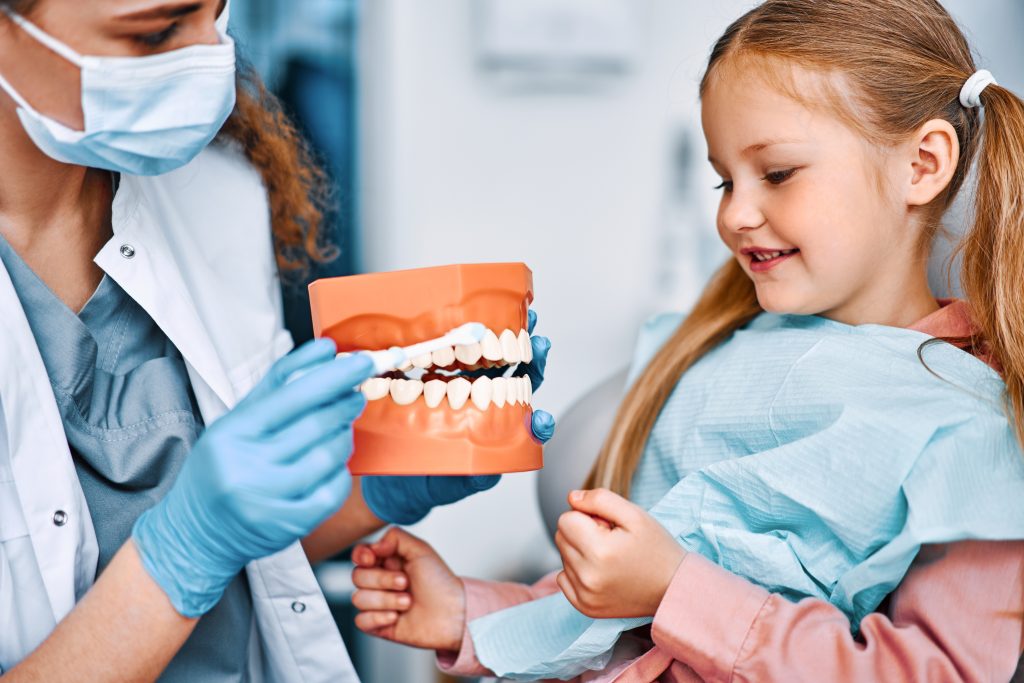
Once your baby’s first tooth emerges, introduce a small, soft-bristled toothbrush.
Brush twice daily using an age-appropriate amount of fluoride toothpaste. Clean all surfaces of the tooth gently, including along the gumline.
Starting early helps children become comfortable with brushing and establishes an important daily habit.
2. Brush Your Child’s Teeth Twice a Day
Regular brushing is essential for removing plaque and protecting tooth enamel against decay.
Children should brush their teeth twice a day, once in the morning and again before bedtime.
Use Fluoride Toothpaste
Fluoride helps strengthen tooth enamel and makes teeth more resistant to acid attacks.
In Australia, the recommended toothpaste amount depends on your child’s age:
- Under 18 months: Use water only unless advised otherwise by a dental professional.
- 18 months to six years: Use a pea-sized amount of low-fluoride children’s toothpaste containing 500–550 ppm fluoride.
- Over six years: Use an appropriate fluoride toothpaste as recommended by your dentist.
Encourage your child to spit out toothpaste after brushing rather than swallowing it.
Supervise Your Child’s Brushing
Young children often lack the coordination needed to clean every tooth effectively.
Parents should supervise and assist with brushing until children develop the necessary skills, generally around seven to eight years old.
Make sure your child brushes for approximately two minutes and cleans the front, back and chewing surfaces of their teeth.
3. Reduce Sugary Foods and Drinks
Diet plays a significant role in preventing childhood tooth decay.
When children consume sugary foods and drinks, bacteria in the mouth use these sugars to produce acids that attack tooth enamel.
Frequent exposure to sugar increases the risk of developing cavities.
Limit Sugary Snacks
Try to reduce the frequency of sugary snacks such as:
- Lollies and sweets.
- Chocolate.
- Biscuits and cakes.
- Sugary breakfast cereals.
- Sticky fruit snacks.
- Sweetened desserts.
Instead, offer healthier alternatives such as cheese, plain yoghurt, vegetables and fresh fruit.
Choose Water Over Sugary Drinks
Water is generally the best everyday drink for children.
Try to limit soft drinks, cordial, sports drinks and sweetened juices, as these can contribute to tooth decay and dental erosion.
Encourage children to drink water throughout the day, particularly between meals.
4. Avoid Putting Your Baby to Bed With a Bottle
Bottle-feeding habits can have a significant impact on a baby’s dental health.
When babies fall asleep with a bottle containing milk, formula or sugary drinks, their teeth can be exposed to sugars for extended periods.
This increases the risk of early childhood tooth decay, sometimes called baby bottle tooth decay.
Establish Healthy Bottle-Feeding Habits
To help protect your baby’s teeth:
- Avoid putting your baby to bed with a bottle.
- Do not allow bottles containing milk or formula to be used as comforters overnight.
- Avoid adding sugar or sweetened flavourings to bottles.
- Begin transitioning away from bottles as your child grows, following professional advice.
Once your baby’s first tooth appears, clean it regularly and arrange an early dental appointment.
5. Introduce Flossing When Teeth Start Touching
Although brushing removes plaque from most tooth surfaces, toothbrushes cannot always reach the tight spaces between teeth.
Flossing helps remove food particles and plaque from these areas.
When Should Children Start Flossing?
Start flossing when your child’s teeth begin touching each other.
Parents may need to assist younger children until they develop the coordination to floss independently.
Making flossing part of the bedtime routine helps establish consistent oral hygiene habits.
6. Schedule Regular Children’s Dental Check-Ups
Regular dental appointments are essential for preventing childhood tooth decay and monitoring your child’s oral development.
Children should generally visit a dentist when their first tooth appears or by their first birthday, whichever comes first.
Why Are Early Dental Visits Important?
During a dental check-up, your dentist can:
- Examine developing baby teeth.
- Identify early signs of tooth decay.
- Check gum health.
- Provide advice on brushing and flossing.
- Discuss fluoride protection.
- Recommend preventive dental treatments where appropriate.
Early dental visits also help children become comfortable with dental appointments, making future visits less intimidating.
How Often Should Children Visit the Dentist?
Many children benefit from dental check-ups every six months. However, the recommended frequency depends on their individual oral health and risk of tooth decay.
Your dentist can recommend an appropriate appointment schedule based on your child’s needs.
7. Make Dental Hygiene Fun and Enjoyable
Getting children to brush regularly can sometimes be challenging, especially when they are young.
Making dental hygiene enjoyable can help encourage consistency and reduce resistance.
Use Fun Toothbrushes and Brushing Songs
Allow your child to choose a toothbrush featuring their favourite colours or characters.
You can also play a two-minute brushing song or use a timer to make sure they brush for long enough.
Lead by Example
Children often copy their parents’ behaviour.
Brushing your teeth together as a family helps demonstrate that oral hygiene is an important part of everyday life.
Praise your child for remembering to brush and encourage them to take an active role in looking after their teeth.
8. Know When to Seek Dental Advice
Even with good dental hygiene habits, children can sometimes develop dental problems.
If your child complains of toothache, experiences sensitivity or develops visible spots or holes in their teeth, arrange a dental assessment.
Do not wait for the discomfort to become severe.
Swelling of the face or gums, fever associated with dental pain, or signs of infection require prompt professional assessment. Significant facial swelling or difficulty breathing or swallowing requires emergency care.
Early treatment can help prevent dental problems from becoming more complicated.
Conclusion: Protect Your Child’s Smile With Preventive Dental Care
Preventing childhood tooth decay starts with simple daily habits and consistent dental care.
By brushing twice daily with fluoride toothpaste, limiting sugary foods and drinks, introducing flossing when appropriate and scheduling regular dental check-ups, parents can significantly reduce their child’s risk of developing cavities.
Remember that baby teeth are important for eating, speech development and guiding permanent teeth into position. Looking after them from an early age provides a strong foundation for lifelong oral health.
With the right guidance, encouragement and preventive care, you can help your child develop healthy dental habits and enjoy a confident, healthy smile as they grow.