


Step-by-Step: What Happens During a Root Canal Procedure?
Root canal therapy is a common dental procedure that saves damaged or infected teeth from extraction. Despite its reputation, modern root canal treatment is safe, virtually painless, and highly effective. Understanding what happens during the procedure can ease anxiety and help you feel prepared for your visit.
In this step-by-step guide, we’ll walk you through the entire root canal process—from diagnosis to recovery—so you know exactly what to expect and how the treatment preserves your natural tooth.
What Is a Root Canal Procedure?
A root canal procedure, also called endodontic therapy, is performed when the soft tissue inside a tooth, known as the pulp, becomes infected or inflamed. The pulp contains nerves, blood vessels, and connective tissue that are vital during tooth development, but once the tooth is fully formed, it can function without it.
Infection or damage to the pulp can cause severe pain, sensitivity, swelling, and even abscesses. Root canal therapy removes the infected pulp, disinfects the canals, and seals the tooth, preserving your natural tooth structure and preventing further complications.
Why a Root Canal Is Needed
A root canal may be recommended for several reasons:
Deep Tooth Decay
Cavities that reach the pulp allow bacteria to infect the tooth’s inner tissue.
Cracked or Chipped Teeth
Damage from accidents or chewing hard foods can expose the pulp to bacteria.
Repeated Dental Work
Multiple procedures on the same tooth can weaken it and irritate the pulp.
Dental Trauma
A sudden blow to the tooth may damage the nerve even without visible cracks.
Ignoring symptoms can lead to severe pain, abscess formation, and eventual tooth loss.
Step 1: Initial Examination and Diagnosis
Before performing a root canal, your dentist will thoroughly evaluate your tooth.
Dental Examination
The dentist will check for signs of infection, swelling, or tooth damage.
Imaging and X-rays
Digital X-rays allow the dentist to see the shape of the root canals, locate infection, and assess bone health. This is essential for planning a precise and effective treatment.
Sensitivity Testing
Your dentist may test how your tooth responds to temperature or pressure to determine the extent of nerve damage.
Step 2: Numbing the Tooth
Before starting the procedure, local anesthesia is administered to ensure comfort. The surrounding gum and tooth are completely numb, so most patients feel little to no pain. For patients with dental anxiety, sedation options may also be offered.
Step 3: Accessing the Pulp Chamber
Creating the Opening
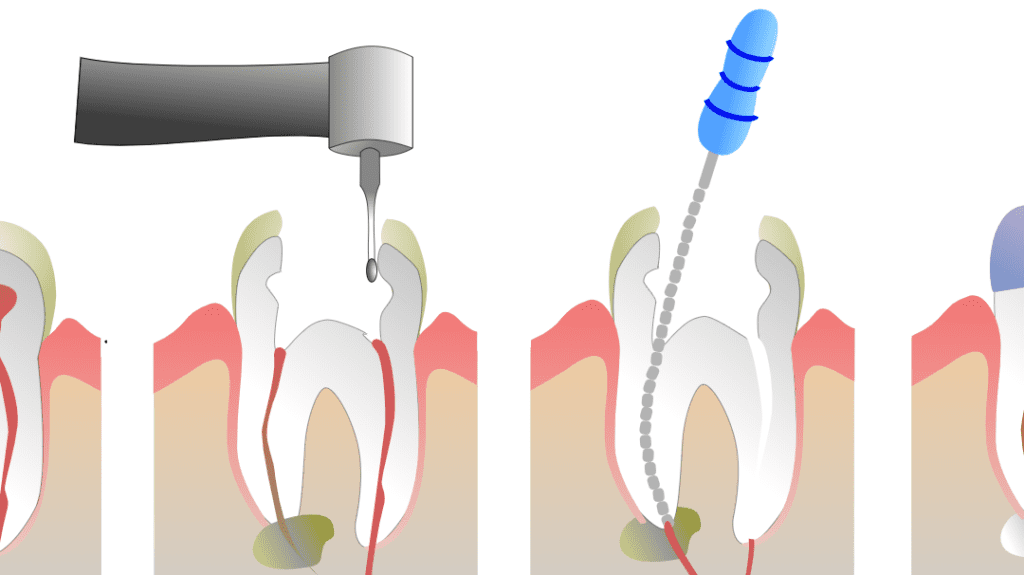
The dentist drills a small hole in the crown of the tooth to access the pulp chamber and root canals. This allows removal of infected tissue and ensures thorough cleaning.
Why This Step Matters
Proper access ensures all infected tissue is removed and reduces the risk of reinfection.
Step 4: Removing the Infected Pulp
Specialized instruments are used to carefully remove the infected or inflamed pulp from each root canal. Removing the pulp eliminates the source of pain and prevents infection from spreading.
Step 5: Cleaning and Shaping the Canals
Disinfection
The empty canals are cleaned with antibacterial solutions to remove bacteria and debris.
Shaping
The dentist shapes the canals to prepare them for filling. Proper shaping ensures that the sealing material can fill the canals completely and prevent future infection.
Step 6: Filling the Canals
After cleaning, the canals are filled with a biocompatible material called gutta-percha. This rubber-like material seals the canals, blocking bacteria from entering. A temporary filling is placed if the tooth needs additional restoration in a future visit.
Step 7: Sealing and Restoring the Tooth
Permanent Filling
The temporary filling is replaced with a permanent restoration to protect the tooth from fracture or infection.
Placing a Crown
In most cases, a dental crown is placed over the treated tooth to restore its strength, function, and appearance. Crowns are especially important for molars or teeth that endure heavy chewing forces.
Step 8: Aftercare and Recovery
Managing Discomfort
Some mild soreness or sensitivity is normal for a few days. Over-the-counter pain relievers usually manage this discomfort.
Oral Hygiene Tips
– Brush twice daily with fluoride toothpaste – Floss daily – Avoid chewing hard foods on the treated tooth until fully restored
Follow-Up Appointments
Your dentist may schedule follow-ups to monitor healing and ensure the crown fits properly.
Common Misconceptions About Root Canal Procedures
Myth 1: Root Canals Are Painful
Modern techniques and anesthesia make root canal procedures comparable in comfort to fillings. Most patients experience relief rather than pain.
Myth 2: Extraction Is Easier
While extraction removes the infected tooth, it can lead to shifting teeth, bite problems, and the need for costly replacements. Root canal therapy preserves your natural tooth and prevents these issues.
Myth 3: Root Canals Fail Often
Root canal success rates exceed 90–95% when performed correctly and followed by proper restoration.
How Long Does a Root Canal Procedure Take?
The duration depends on the complexity of the tooth:
Front teeth: Usually 60–90 minutes, often in one visit
Premolars or molars: 90 minutes or more, sometimes requiring two visits
Your dentist will provide a personalized estimate based on the tooth’s condition.
Benefits of Root Canal Treatment
Preserves your natural tooth
Eliminates pain and infection
Prevents bone loss and gum complications
Maintains proper bite alignment
Reduces the need for future costly dental work
Final Thoughts: What to Expect During a Root Canal
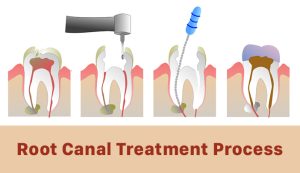
Root canal procedures are carefully designed to save your natural tooth while eliminating infection and discomfort. By following each step—diagnosis, anesthesia, pulp removal, cleaning, filling, and restoration—you can protect your oral health for years to come.
Understanding the process reduces anxiety, helps you prepare for your appointment, and ensures a smooth recovery. If you experience persistent tooth pain, sensitivity, or swelling, don’t delay—consult your dentist promptly for evaluation and timely root canal therapy.