

The Difference Between Dental Crowns and Veneers Explained
When it comes to restoring and enhancing your smile, dental crowns and veneers are two of the most common options. Both improve the appearance and function of teeth, but they serve different purposes and have unique benefits. Understanding the differences between dental crowns and veneers is essential for making the right choice for your oral health and aesthetic goals. This guide explains the key distinctions, benefits, procedures, and considerations for each option.
What Are Dental Crowns?
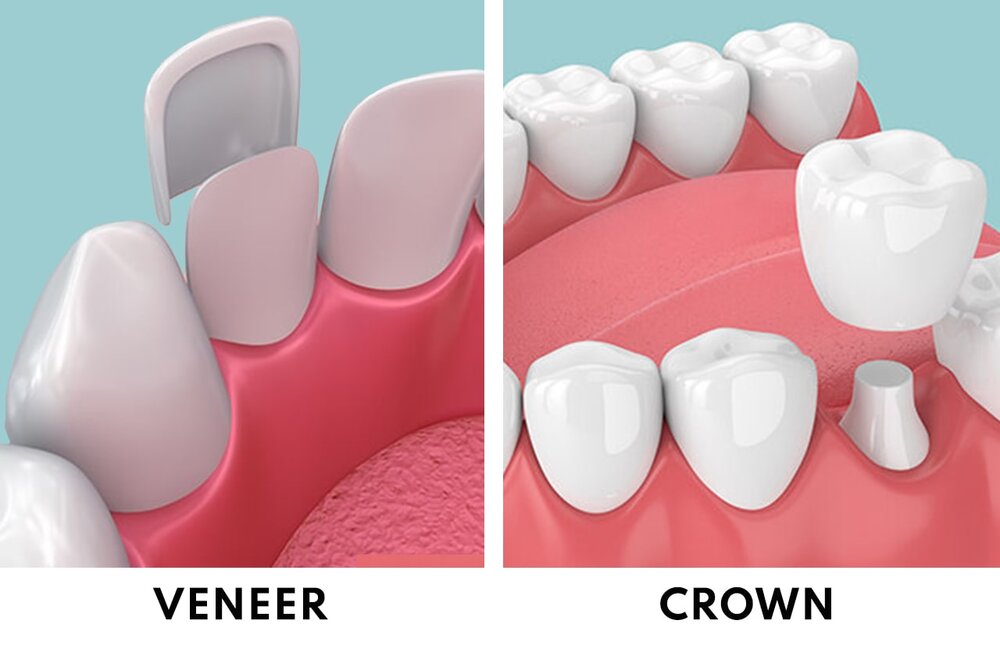
Dental crowns, also known as tooth caps, are custom-made coverings that completely encase a damaged or weakened tooth. They restore the tooth’s shape, size, strength, and appearance. Crowns are often recommended for teeth that have undergone root canal therapy, have large fillings, are cracked, or are severely worn down.
Key Features of Dental Crowns
- Full Coverage: Crowns cover the entire visible portion of the tooth.
- Material Options: Available in porcelain, ceramic, metal, porcelain-fused-to-metal (PFM), and zirconia.
- Purpose: Protects and strengthens weakened teeth while restoring function.
- Durability: Typically lasts 10–15 years or longer with proper care.
What Are Veneers?
Veneers are thin, custom-made shells designed to cover only the front surface of teeth. They are primarily used for cosmetic purposes to improve the appearance of your smile. Veneers are commonly made from porcelain or composite resin and are bonded to the front of the teeth to correct discoloration, minor misalignment, chips, or gaps.
Key Features of Veneers
- Partial Coverage: Veneers cover only the front surface of the tooth.
- Material Options: Typically made from porcelain or composite resin for a natural appearance.
- Purpose: Enhances aesthetics by improving color, shape, and alignment of teeth.
- Durability: Porcelain veneers last 10–15 years, while composite veneers may last 5–7 years.
Dental Crowns vs. Veneers: Key Differences
While both dental crowns and veneers enhance your smile, they have important differences in purpose, coverage, and longevity.
1. Coverage
Dental crowns cover the entire tooth, including the front, back, and sides. This makes them ideal for teeth that are severely damaged or weakened. Veneers, on the other hand, cover only the front surface, focusing on cosmetic improvements rather than full protection.
2. Purpose
Dental crowns are primarily used to restore function and protect compromised teeth. They provide strength and structural support. Veneers are mostly cosmetic, designed to improve the color, shape, and alignment of teeth without significantly altering their strength.
3. Tooth Preparation
For crowns, significant tooth reduction is usually required to accommodate the full coverage. Veneers require minimal tooth reduction, preserving more of the natural tooth structure.
4. Material and Strength
Crowns are made from durable materials such as porcelain, metal, or zirconia, making them stronger and more protective than veneers. Veneers, while strong, are thinner and designed mainly for aesthetics rather than heavy chewing forces.
5. Longevity
Both options can last a long time with proper care, but crowns generally offer greater durability due to full coverage and stronger materials. Veneers are more susceptible to chipping or cracking if subjected to excessive pressure.
Benefits of Dental Crowns
Dental crowns offer multiple advantages, especially for teeth that are structurally compromised:
- Strength and Protection: Crowns protect weak or damaged teeth from further decay or fractures.
- Restoration: Restore chewing function and bite alignment.
- Cosmetic Improvement: Improve appearance of discolored or misshapen teeth.
- Versatility: Can support dental bridges and cover implants.
Benefits of Veneers
Veneers are an excellent option for enhancing the aesthetics of your smile without significant structural changes:
- Natural Appearance: Veneers blend seamlessly with natural teeth for a bright, attractive smile.
- Minimally Invasive: Requires less tooth removal than crowns.
- Quick Cosmetic Solution: Corrects discoloration, gaps, minor misalignment, and chips efficiently.
- Long-Lasting Results: Porcelain veneers can last over a decade with proper care.
The Procedure: Crowns vs. Veneers
Dental Crown Procedure
- Consultation: Dentist examines the tooth, takes X-rays, and discusses material options.
- Tooth Preparation: The tooth is shaped and reduced to fit the crown.
- Impressions: Impressions are taken and sent to a lab to create a custom crown.
- Temporary Crown: A temporary crown is placed while waiting for the permanent one.
- Permanent Crown Placement: The permanent crown is adjusted and cemented in place.
Veneer Procedure
- Consultation: Dentist evaluates cosmetic needs and discusses material options.
- Tooth Preparation: Minimal enamel is removed from the front surface.
- Impressions: Impressions are taken to fabricate custom veneers.
- Temporary Veneers (Optional): Temporary veneers may be placed while waiting for the permanent ones.
- Veneer Placement: Veneers are bonded to the front of the teeth and adjusted for alignment and bite.
Aftercare for Crowns and Veneers
Proper oral hygiene and care ensure longevity for both crowns and veneers:
- Brush and floss regularly to prevent decay and gum disease.
- Avoid biting hard objects such as ice or pens.
- Wear a nightguard if you grind your teeth.
- Visit your dentist regularly for check-ups and professional cleanings.
Cost Comparison
The cost of crowns and veneers varies based on material, location, and complexity:
- Dental Crowns: $800–$3,000 per tooth depending on material (porcelain, metal, PFM, zirconia)
- Veneers: $500–$2,500 per tooth depending on material (porcelain or composite)
Insurance may cover crowns if medically necessary, while veneers are often considered cosmetic and may not be covered.
Conclusion
Dental crowns and veneers are both effective solutions for improving your smile, but they serve different purposes. Crowns provide full protection, restore function, and are ideal for damaged or weakened teeth. Veneers focus on aesthetics, improving the appearance of teeth with minimal alteration. Understanding the differences between crowns and veneers helps you make an informed decision with your dentist to achieve a healthy, beautiful smile.
Whether you need structural support or cosmetic enhancement, consulting with a qualified dentist ensures the best results. Both crowns and veneers can save your teeth and enhance your confidence when chosen and cared for properly.